
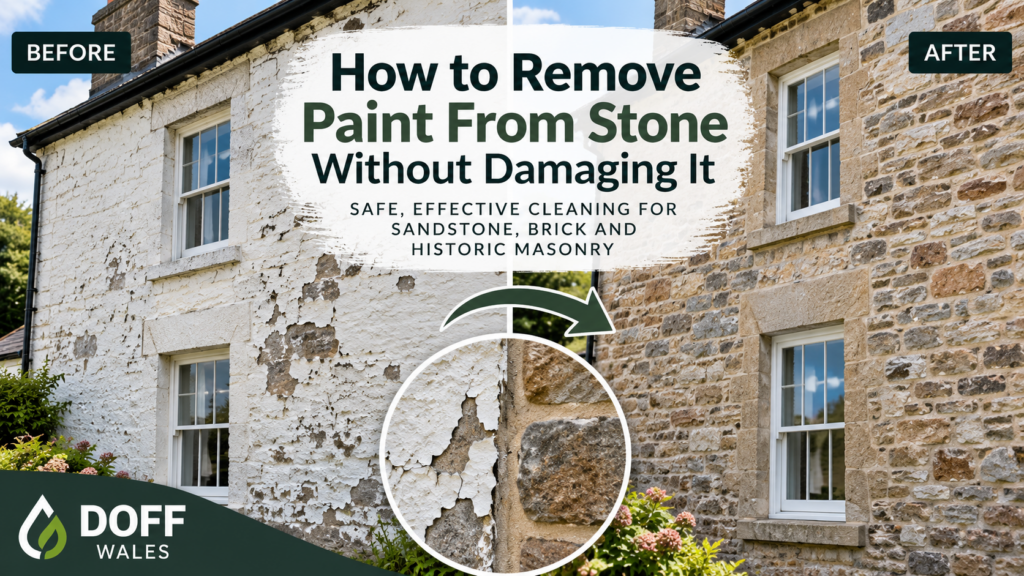
Removing paint from stone can completely transform the appearance of a property, revealing the original character of the masonry underneath. However, it is also a job that needs to be approached carefully.
Stone is not simply a hard, indestructible surface. Sandstone, limestone and other traditional building materials can be surprisingly vulnerable to aggressive cleaning methods. Using excessive pressure, abrasive blasting or an unsuitable chemical paint stripper can potentially damage the face of the stone and surrounding mortar.
This is particularly important when working on older properties, listed buildings and historic stonework.
At DOFF Wales, we specialise in the careful cleaning and restoration of stone, brick and masonry using the DOFF superheated steam cleaning system.
Why Remove Paint From Stone?
Over the years, many stone buildings have been painted for decorative reasons, weather protection or simply because it was fashionable at the time.
Today, property owners often want to remove these coatings to reveal the original stonework.
Common examples include:
Painted stone cottages
Sandstone façades
Painted stone window surrounds
Boundary and garden walls
Historic buildings
Churches and chapels
Listed buildings
Brick and stone commercial properties
Removing layers of old paint can dramatically change a building’s appearance, but the objective should always be to remove the coating without unnecessarily damaging the original surface beneath it.
Can You Pressure Wash Paint Off Stone?
This is one of the first questions property owners often ask.
A powerful pressure washer may appear to be the obvious solution, but high-pressure water can be too aggressive for certain types of stone and historic masonry.
The problem is that the pressure required to remove a stubborn coating may also affect the surface underneath.
Depending on the condition and type of masonry, inappropriate high-pressure cleaning can potentially:
Erode softer stone surfaces
Damage pointing and mortar joints
Remove the natural surface of weathered stone
Drive excessive moisture into porous masonry
Leave an uneven finish
That is why we don’t recommend attacking painted stonework with the most powerful pressure washer available.
The correct cleaning method should be selected according to the stone, coating and condition of the building.
What About Sandblasting Paint From Stone?
Abrasive blasting can remove paint very quickly, but speed isn’t necessarily the most important consideration when working with traditional masonry.
An aggressive abrasive process can alter the texture and appearance of stone if it is unsuitable for the surface.
Once the original face of historic stone has been damaged, it cannot simply be put back.
For heritage buildings in particular, the aim should normally be to use the least aggressive effective cleaning method.
Using DOFF Steam Cleaning to Remove Paint From Stone
One method that can be extremely effective for suitable projects is DOFF superheated steam cleaning.
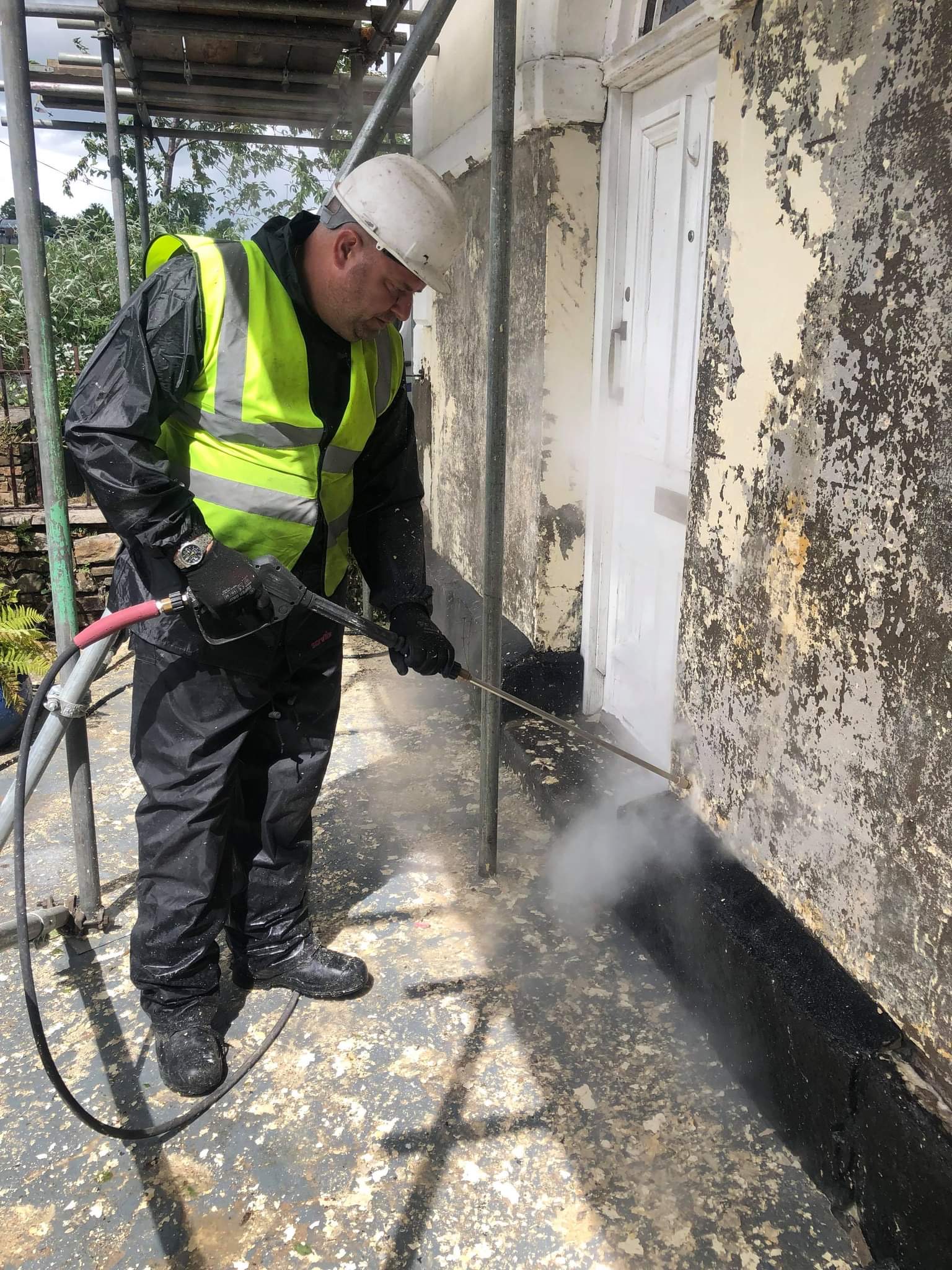
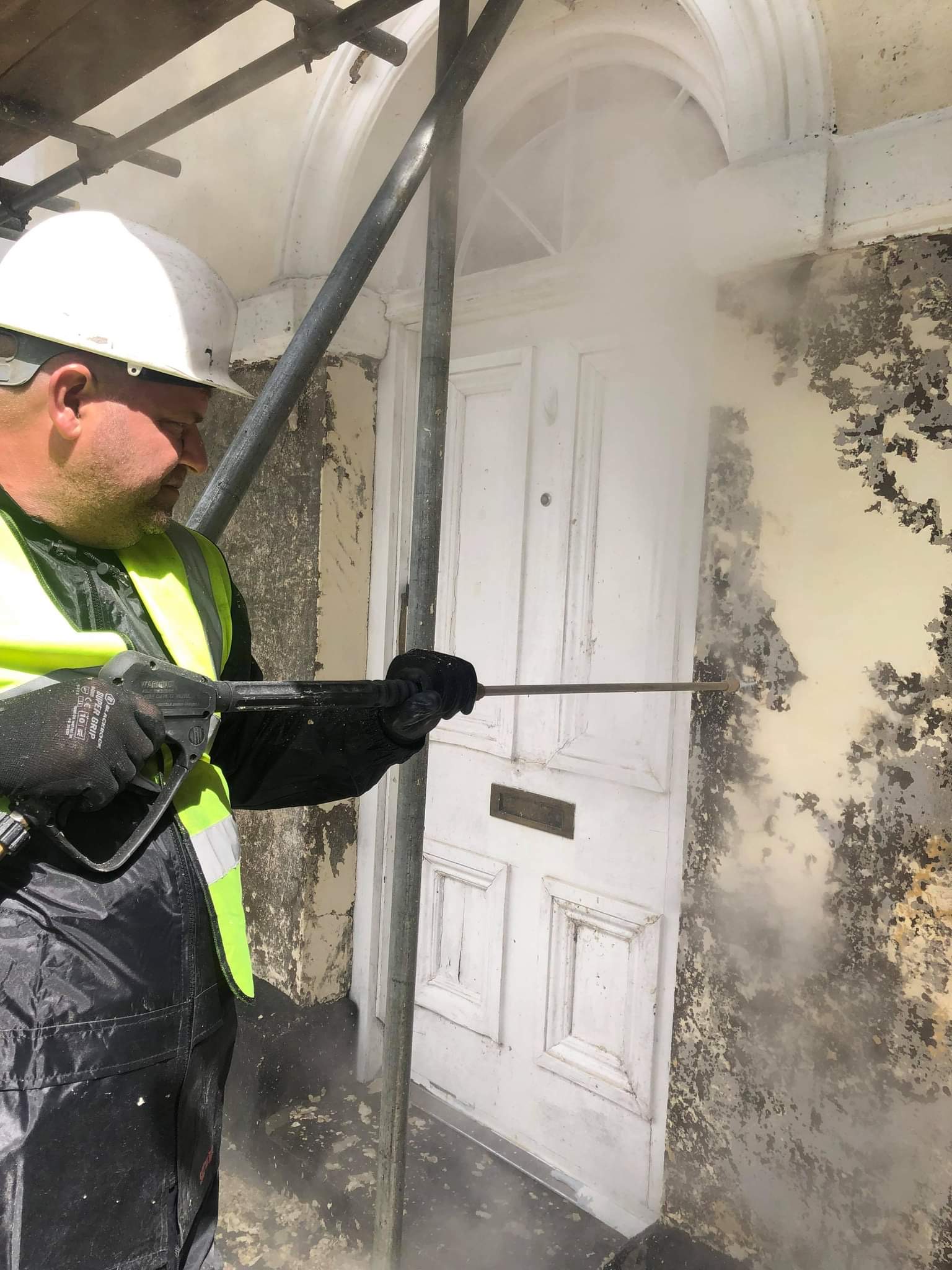
The DOFF system uses water heated to temperatures of up to approximately 150°C at the nozzle, allowing heat to do much of the cleaning work rather than relying purely on aggressive water pressure.
This combination of high temperature and controlled pressure can help soften and break the bond between certain paints or coatings and the underlying masonry.
The coating can then be carefully removed while reducing the need for aggressive mechanical cleaning.
DOFF cleaning can be used on many types of masonry, including:
Sandstone
Limestone
Brick
Terracotta
Concrete
Stone façades
Historic masonry
However, every building and coating is different, which is why the surface should be assessed before cleaning begins.
Can DOFF Remove All Types of Paint?
There isn’t a single cleaning process that is suitable for every paint, coating and substrate.
The effectiveness of DOFF cleaning will depend on factors such as:
The type of paint
Modern masonry paint, older coatings and specialist paints can behave very differently.
How many layers are present
A property that has been repeatedly painted over many decades may require a different approach from one with a single coating.
The type of stone underneath
Hard masonry and soft, weathered sandstone need to be treated differently.
The condition of the surface
Previous repairs, damaged pointing and fragile stone all need to be taken into consideration.
How strongly the coating has bonded
Some paints release relatively easily when heated, while others may require additional treatment or a combination of methods.
This is why a test area can be extremely valuable.
Rather than promising a particular result without seeing the property, we can assess the surface and establish an appropriate cleaning method.
Removing Paint From Sandstone
Sandstone deserves particular care.
It is found on many traditional properties throughout Wales and can vary considerably in hardness, condition and porosity.
Old or weathered sandstone can have a delicate surface. Using excessive pressure to remove paint may expose fresh material beneath the weathered face and permanently change the appearance of the stone.
The objective isn’t simply:
“How quickly can we get this paint off?”
A better question is:
“How can we remove the unwanted coating while preserving as much of the original stone as possible?”
That distinction is particularly important when dealing with period and historic properties.
What About Listed Buildings?
Paint removal from a listed building needs additional consideration.
Before carrying out significant cleaning or removing existing finishes, it may be necessary to establish whether consent or conservation advice is required.
The historical significance of the existing finish should also be considered. Just because a coating looks relatively modern does not automatically mean it should be removed.
Where listed or particularly sensitive buildings are involved, we recommend establishing the appropriate conservation requirements before proceeding.
A small test area can also help demonstrate how the proposed cleaning process affects both the coating and the underlying masonry.
Will the Stone Look Brand New Afterwards?
Not necessarily – and on an old building, that usually shouldn’t be the objective.
Traditional stone naturally develops variations in colour, texture and weathering over many years.
Professional stone cleaning should aim to remove the unwanted contamination or coating while retaining the character of the building.
Once paint has been removed, you may also discover variations that were previously hidden, including:
Old repairs
Different types of stone
Previous pointing
Historic staining
Areas of weathering
Previously replaced masonry
These aren’t necessarily cleaning defects. They are often simply part of the history of the building that the paint had concealed.
How Much Does Paint Removal From Stone Cost?
The cost depends on the individual project.
Factors include:
Size of the area
Height and access
Type of paint or coating
Number of paint layers
Type and condition of the stone
Scaffolding or access equipment required
Complexity of architectural details
Level of protection required around windows, roofs, and surrounding surfaces
For this reason, the most reliable way to establish a price is to inspect the property and understand exactly what needs to be removed.
Can I Remove Paint From Stone Myself?
For a small modern garden wall, DIY paint removal may be possible.
For the exterior of a house, historic masonry, sandstone or a listed building, there is considerably more at stake.
Before attempting DIY removal, consider what happens if the process starts damaging the stone underneath.
Damage caused by an overly aggressive cleaning method may be far more expensive to rectify than having the work professionally assessed in the first place.
If you’re unsure, arranging an assessment or test patch before committing to a particular cleaning method can be a sensible approach.
Paint Removal From Stone Across Wales
DOFF Wales provides specialist DOFF cleaning for residential, commercial and historic properties throughout Wales.
We can assess painted stone and masonry to determine whether DOFF steam cleaning is appropriate for the surface and coating involved.
Our work includes traditional homes, stone cottages, listed buildings, churches, commercial properties and other sensitive masonry.
Have You Got Painted Stonework You'd Like to Restore?
If you have painted sandstone, brickwork or other masonry and would like to reveal the original surface underneath, contact DOFF Wales to arrange a site survey.
We can inspect the existing coating, assess the condition of the masonry and discuss the most appropriate approach.
Where appropriate, a test area can also be carried out so you can see how the stone responds before progressing with the wider project.
Contact DOFF Wales today to discuss your stone or brick paint-removal project.